
How to Measure for Metal Roofing?
Knowing how to measure for metal roofing correctly is the foundation of a successful roofing project, whether it involves residential metal roofing or large commercial metal roof installation. Accurate metal roof measurements ensure proper panel coverage, efficient material estimation, and long-term roof performance. The roof measuring process requires careful attention to roof geometry, roof surface area, roof pitch, and overall roof layout to avoid costly errors. Measuring a roof for metal roofing is not simply about length and width but about understanding roof planes, roof sections, drainage paths, and how metal roof panels interact with wind uplift requirements and building code compliance.
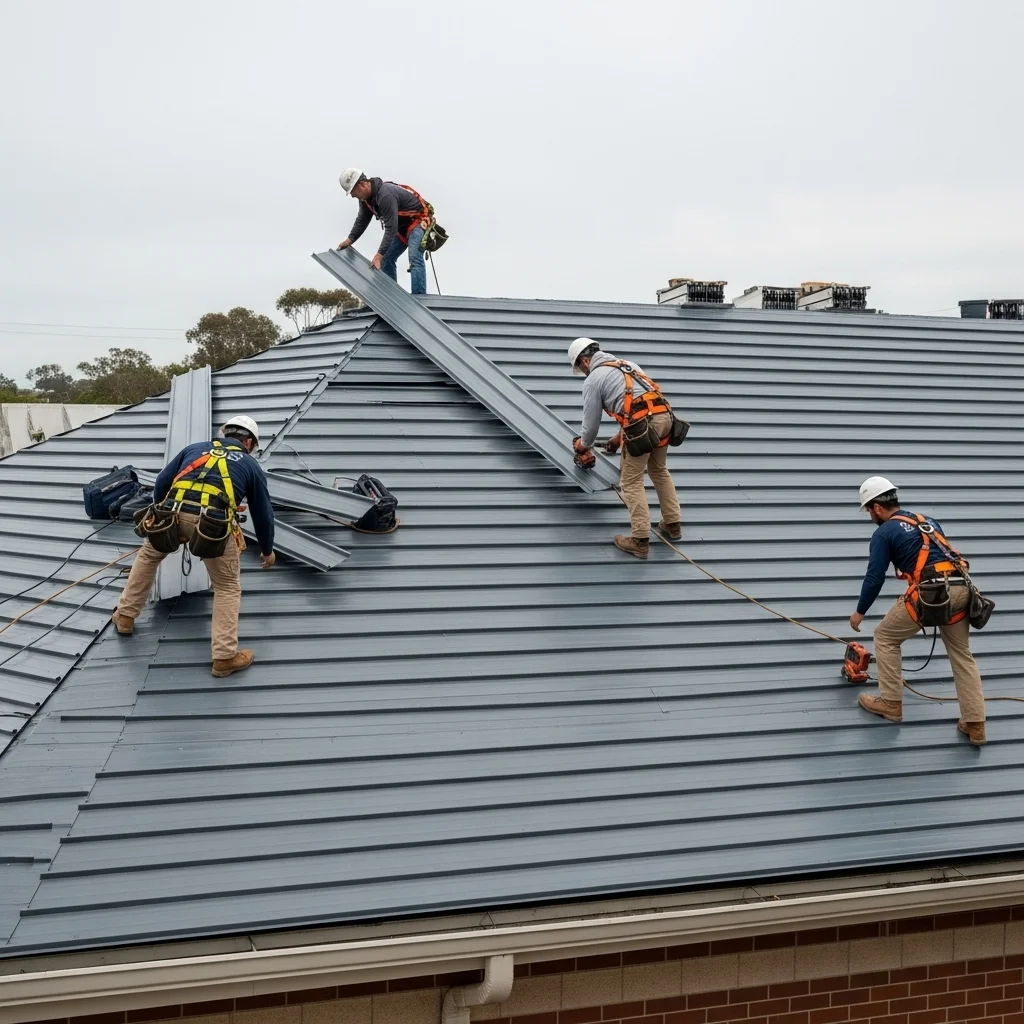
Tools, Safety Measures, and Preparation Before Measuring a Metal Roof
Before beginning any metal roofing measurement guide, preparation and roof safety must come first. Proper roof measuring tools such as a measuring tape, ladder, level, ruler, calculator, notepad, and pencil are essential for field measurements and on-site verification. Roof access safety should never be overlooked, especially when dealing with steep roof slope or roof incline. A fall protection system, safety harness, and stable ladder placement are critical for accurate roof measurement and personal safety. In some cases, aerial roof measurements or satellite roof measurements can assist with preliminary planning, but contractor measurements and field verification remain the most reliable approach for precise metal roofing measurements. conditions.
Table of Contents
- How to Measure for Metal Roofing?
- Tools, Safety Measures, and Preparation Before Measuring a Metal Roof
- Understanding Roof Geometry, Pitch, and Key Measurement Terms
- How to Measure for Metal Roofing Starting With a Roof Sketch
- Measuring Roof Length, Width, and Total Square Footage Accurately
- Measuring Hips, Valleys, Penetrations, and Complex Roof Designs
- Calculating Metal Panel Length, Width, Waste, and Material Requirements
- Verifying Measurements, Avoiding Common Errors, and Final Planning Tips
Understanding Roof Geometry, Pitch, and Key Measurement Terms
A clear understanding of roof geometry is necessary before calculating roof square footage or panel quantities. Roof pitch, expressed as rise over run, determines the roof slope and directly affects the pitch multiplier used in material calculation. Common roof types such as gable roof, hip roof, valley roof, and dormer roof each present different challenges in measuring roof planes and roof sections. Ridge lines, valley lines, hip lines, eaves, fascia boards, and roof overhangs must all be identified to create an accurate roof plan. Roof incline impacts water runoff, weather exposure, and wind ratings, making roof geometry a key factor in roof system design and installation planning.
How to Measure for Metal Roofing Starting With a Roof Sketch
Creating a roof sketch is one of the most important steps in measuring a roof for metal roofing. A detailed roof sketch transforms raw measurements into a clear roof layout that shows roof planes, ridge lines, valleys, hips, and roof-to-wall transitions. Each roof section should be drawn to scale and labeled clearly to reflect the actual roof plan. This visual reference helps align metal panel layout, panel orientation, and panel overlap decisions later in the project. A well-prepared roof sketch also improves communication during professional roof takeoff and simplifies material estimation for metal roofing quantities.
Measuring Roof Length, Width, and Total Square Footage Accurately
Accurate roof surface area calculation begins with measuring the length and width of each roof plane along the eave and ridge. These measurements are adjusted using the pitch multiplier to calculate true roof square footage on sloped surfaces. Roof overhangs should be considered carefully, as metal roof panels often extend beyond the fascia board to manage roof drainage and water runoff. The roof measuring process must account for each roof section individually, especially on irregular roof shape designs. Precise roof square footage ensures proper roofing material planning and avoids shortages or excess material waste.
Measuring Hips, Valleys, Penetrations, and Complex Roof Designs
Complex roof design requires additional attention during metal roof measurements. Hip lines, valley lines, and roof intersections must be measured accurately to ensure correct valley metal, hip cap, and flashing installation. Roof penetrations such as skylights, chimneys, pipe boots, and other roof penetrations must be identified and measured separately to allow for proper flashing and sealants. Roof-to-wall transitions and dormer roof sections often require custom trim components and precise cuts. Measuring these elements correctly improves installation accuracy and long-term material durability while maintaining roof performance under weather exposure.
Calculating Metal Panel Length, Width, Waste, and Material Requirements
Material calculation begins once roof measurements are finalized. Panel length and panel width are determined based on roof plane dimensions, panel orientation, and metal panel layout. Standing seam panels, exposed fastener panels, and corrugated metal panels each have different panel coverage and panel overlap requirements, including side lap and end lap allowances. A waste factor must be added to account for cuts, layout adjustments, and installation sequencing. Accurate material takeoff and material estimation ensure the correct quantities of metal roof panels, underlayment, fasteners, concealed clips, trim components, ridge cap, rake trim, eave trim, and valley metal are ordered without unnecessary excess.
Verifying Measurements, Avoiding Common Errors, and Final Planning Tips
Verifying roof measurements is a critical final step before ordering materials. On-site verification and contractor measurements help confirm roof dimensions, roof pitch, and panel layout accuracy. Professional roof takeoff services are often used on large or complex projects to ensure accurate roof measurement and compliance with wind uplift requirements and local building code compliance. Careful verification reduces material waste management issues, supports labor planning, and improves overall project planning. Accurate roof measurement directly impacts metal roof installation quality, installation accuracy, and the long-term performance of the roof system.