
How to Overlap Metal Roofing?
Metal roofing overlap is a critical roofing technique used to ensure weatherproofing, structural integrity, and long-term roof durability across residential roofing and commercial roofing applications. Whether working with corrugated metal roofing, steel roofing sheets, aluminum roofing, zinc roofing, or copper roofing, proper roof sheet overlaps protect against water ingress, wind-driven rain, and capillary action. Overlapping metal roof panels correctly also plays a major role in roof drainage, roof runoff management, and resistance to wind uplift, especially on low-pitch roofs and steep roofs. By following manufacturer installation guidelines, roofing best practices, and building code compliance, a correctly overlapped single-skin metal roof delivers enhanced roof longevity, reduced roof maintenance, and a professional finish that supports both roof aesthetics and structural protection.
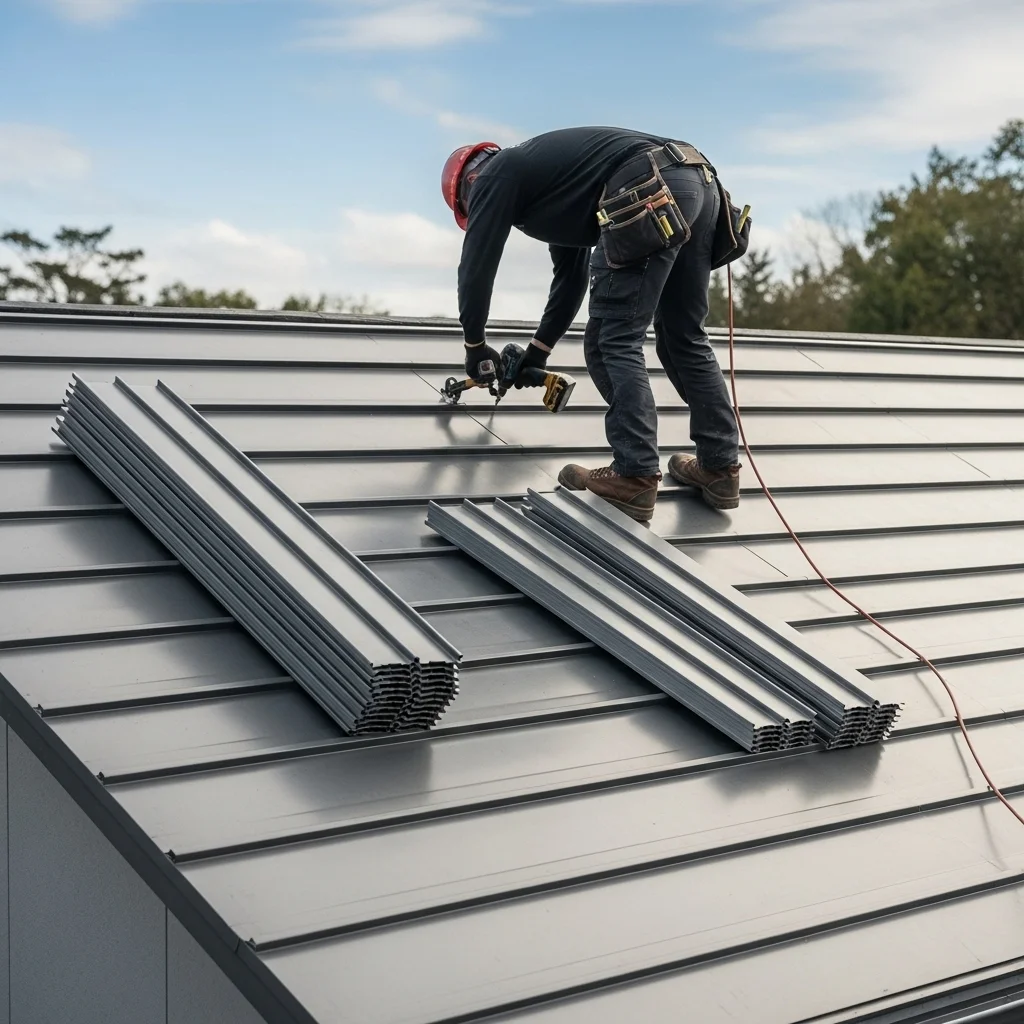
Why Proper Metal Roof Overlapping Matters for Leak Prevention and Durability
Correct roofing overlap is fundamental to creating a watertight seal that prevents leaks and long-term damage caused by condensation, corrosion, and water pooling. When metal sheets are improperly overlapped, rainwater can be drawn upward through capillary action, particularly during wind-driven rain events, leading to premature roof repair or roof replacement. Properly designed roof sheet overlaps improve load distribution across the roof span, reduce stress on fasteners, and protect coated steel from cut-edge corrosion and rust formation. In modern metal roofing systems, effective overlapping also supports energy efficiency by reducing heat loss, improving heat reflection, and maintaining consistent performance of roofing coatings such as graphene-enhanced coatings and liquid-applied coatings reinforced with fleece or glass reinforcement.
Table of Contents
- How to Overlap Metal Roofing?
- Why Proper Metal Roof Overlapping Matters for Leak Prevention and Durability
- Types of Metal Roofing Panels and Their Overlap Requirements
- Recommended Side Lap and End Lap Measurements for Metal Roof Sheets
- Step-by-Step Guide to Overlapping Metal Roofing Panels Correctly
- Best Practices for Sealing, Fastening, and Aligning Overlap Joints
- Common Metal Roof Overlapping Mistakes and How to Avoid Them
- Professional vs DIY Metal Roof Overlap Installation: What to Choose
Types of Metal Roofing Panels and Their Overlap Requirements
Different roofing profiles require different overlapping approaches due to variations in corrugation depth, rib spacing, and raised seams. Corrugated profile sheets and ribbed sheets typically rely on corrugation overlap and rib overlap to manage roof runoff efficiently, while box profile and tileform sheets require precise side overlap alignment to maintain roof aesthetics and water resistance. Standing seam and snap-lock panels use concealed fastening systems with raised seams that rely less on traditional side lap methods but still demand precise end lap detailing when sheet length limitations apply. Vertical cladding applications follow similar principles but require careful consideration of gravity-driven drainage. Understanding roofing profiles, material thickness, and expansion and contraction behavior is essential to forming weatherproof joint formation across all metal roof panels.
Recommended Side Lap and End Lap Measurements for Metal Roof Sheets
Side lap and end lap dimensions vary based on roof pitch, roof slope, and exposure conditions. Low-pitch roofs require larger end lap overlaps to counter slow drainage and increased water pooling risk, while steep roofs can function effectively with shorter overlaps due to faster roof runoff. Typically, side overlap involves one full corrugation or rib for corrugated metal roofing, while end overlap must account for prevailing wind direction and rainfall intensity. Longer sheet length reduces the number of end laps required, improving roof durability and minimizing potential leak points. Using a roofing calculator during roof measurement helps determine optimal sheet width, sheet length, and overlap allowance, ensuring compliance with professional roof installation standards.
Step-by-Step Guide to Overlapping Metal Roofing Panels Correctly
Successful roofing installation begins with thorough roof deck preparation, accurate roof measurement, and proper purlin framework construction using z purlins, c sections, or standard roof purlins. Installation should progress from the eaves to the ridge while working with the prevailing wind direction to reduce wind uplift risk. Roofing felt or underlayment must be installed beneath the metal sheets to manage condensation and secondary water protection. Precise sheet alignment using a chalk line ensures consistent panel spacing, while pre-drilling sheets supports accurate panel fastening. Roof panel ribs must interlock correctly at each sheet overlap, followed by secure fastening with self-drilling screws or tek screws fitted with washers to maintain a watertight seal across all overlaps.
Best Practices for Sealing, Fastening, and Aligning Overlap Joints
Effective seam sealing is essential to long-lasting metal roofing performance. Sealant selection depends on roof type, exposure level, and material compatibility, with common options including butyl sealing tape, silicone sealant, mastic sealant, and roofing cement. Sealants must be applied consistently along side lap and end lap joints before fastening to prevent water ingress and corrosion. Flashing installation at ridges, valleys, hips, and roof edges further enhances weather resistance, using ridge flashing, valley flashing, hip flashing, bargeboards, and fascias to complete roof edge finishing. Proper fastener spacing, controlled torque application using a power drill, and alignment checks all contribute to a professional finish and superior wind resistance.
Common Metal Roof Overlapping Mistakes and How to Avoid Them
Roofing mistakes often stem from insufficient overlap, misaligned sheets, or incorrect fastener placement, leading to compromised roof inspection results and early roof repair requirements. Failing to account for roof pitch, ignoring manufacturer installation guidelines, or skipping hose testing for leaks can allow water penetration at vulnerable joints. Over-tightening fasteners damages washers and accelerates corrosion, while under-tightening increases wind uplift risk. Inadequate sealing at cut edges promotes rust formation, particularly on coated steel systems. Avoiding these issues requires disciplined adherence to roofing techniques, careful panel trimming, proper flashing detailing, and regular roof inspection during and after installation.
Professional vs DIY Metal Roof Overlap Installation: What to Choose
DIY roofing can be cost-effective for small residential roofing projects, but it demands a high level of roof safety awareness, tool proficiency, and installer training. Working at heights requires personal protective equipment such as safety harnesses, gloves, ladders, and proper sheet handling equipment or lifting equipment for heavier steel sheets. Professional roof installation offers advantages including building code compliance, precision workmanship, and access to roll-forming machines for custom sheet fabrication. Professionals also ensure correct application of advanced roofing coatings, compliance with structural load requirements, and long-lasting roof systems that maximize roof longevity and minimize ongoing roof maintenance needs.